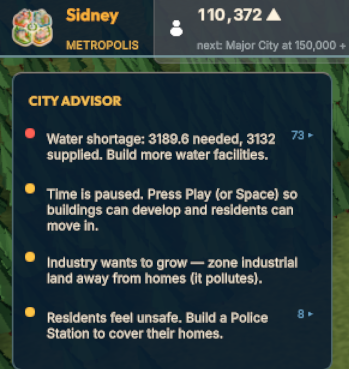
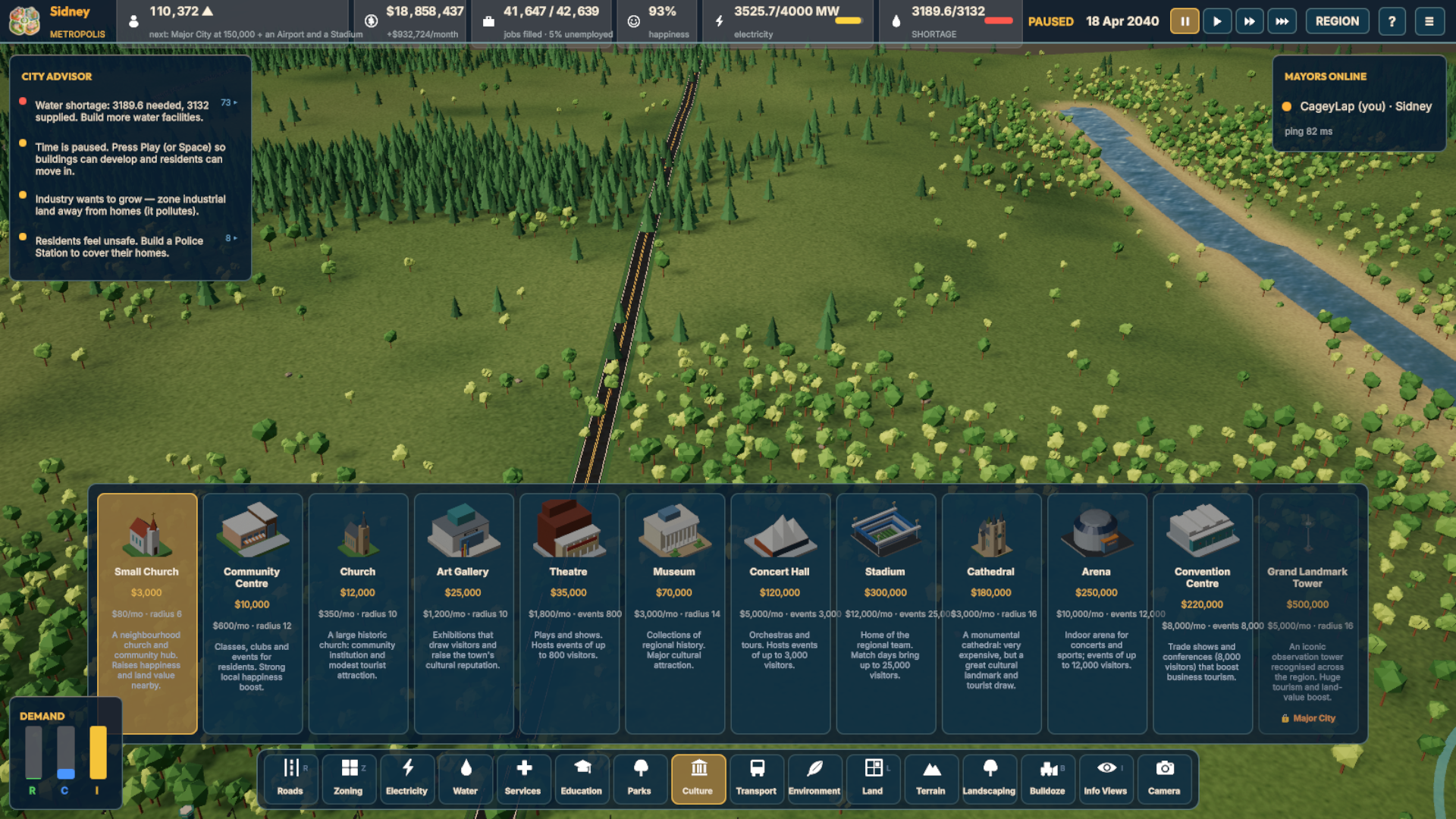
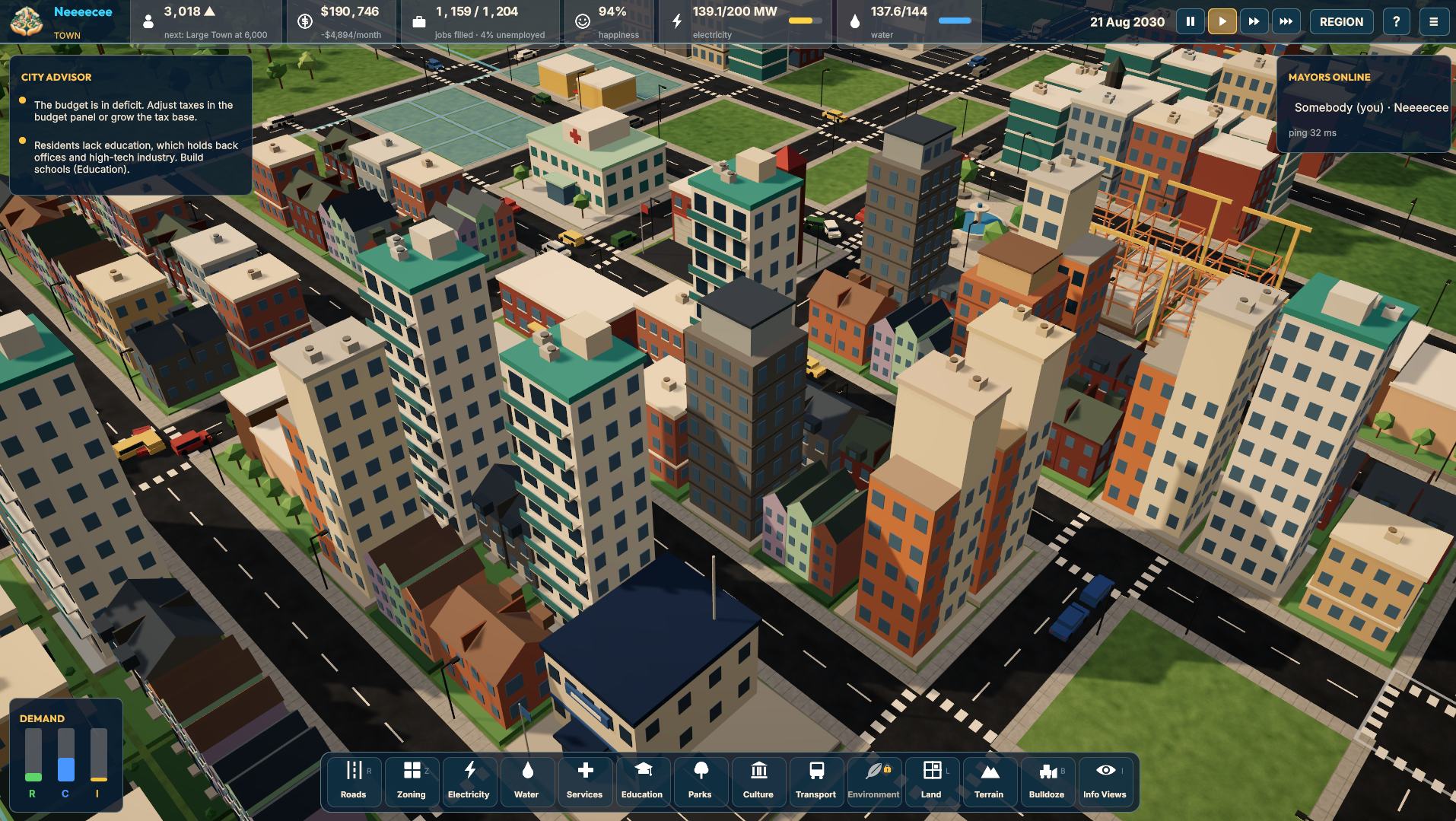
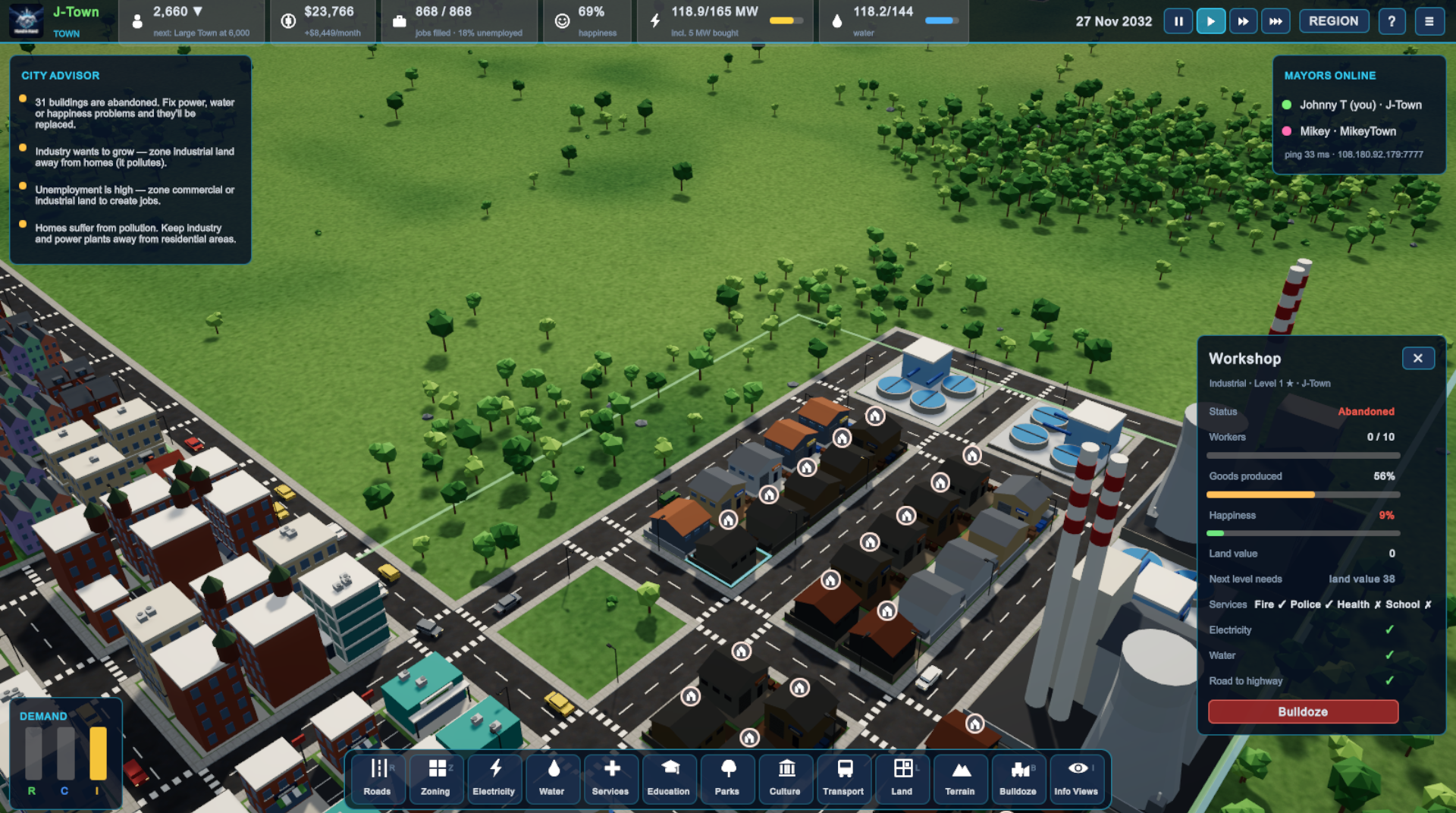
As cities grow beyond 100,000 residents, keeping track of everything becomes a challenge. I've expanded the City Advisor to identify real problems, introduced live event notifications, and added click-to-zoom navigation so mayors can jump straight to fires, building upgrades, and other events.
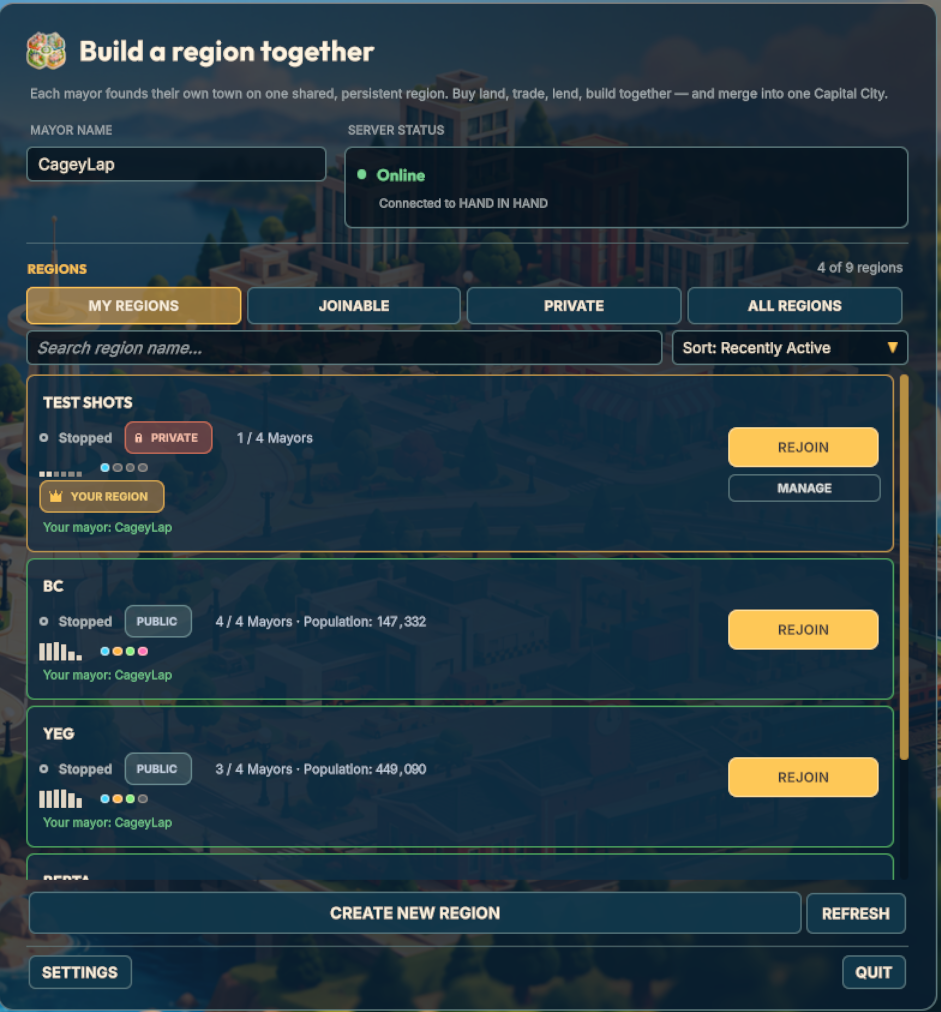
With more testers joining HAND IN HAND, the dedicated server was filling up with regions — including a dozen or more of my own test games. The new lobby introduces useful filters, password-protected private regions, region-name search, and tools for creators to clean up old games.
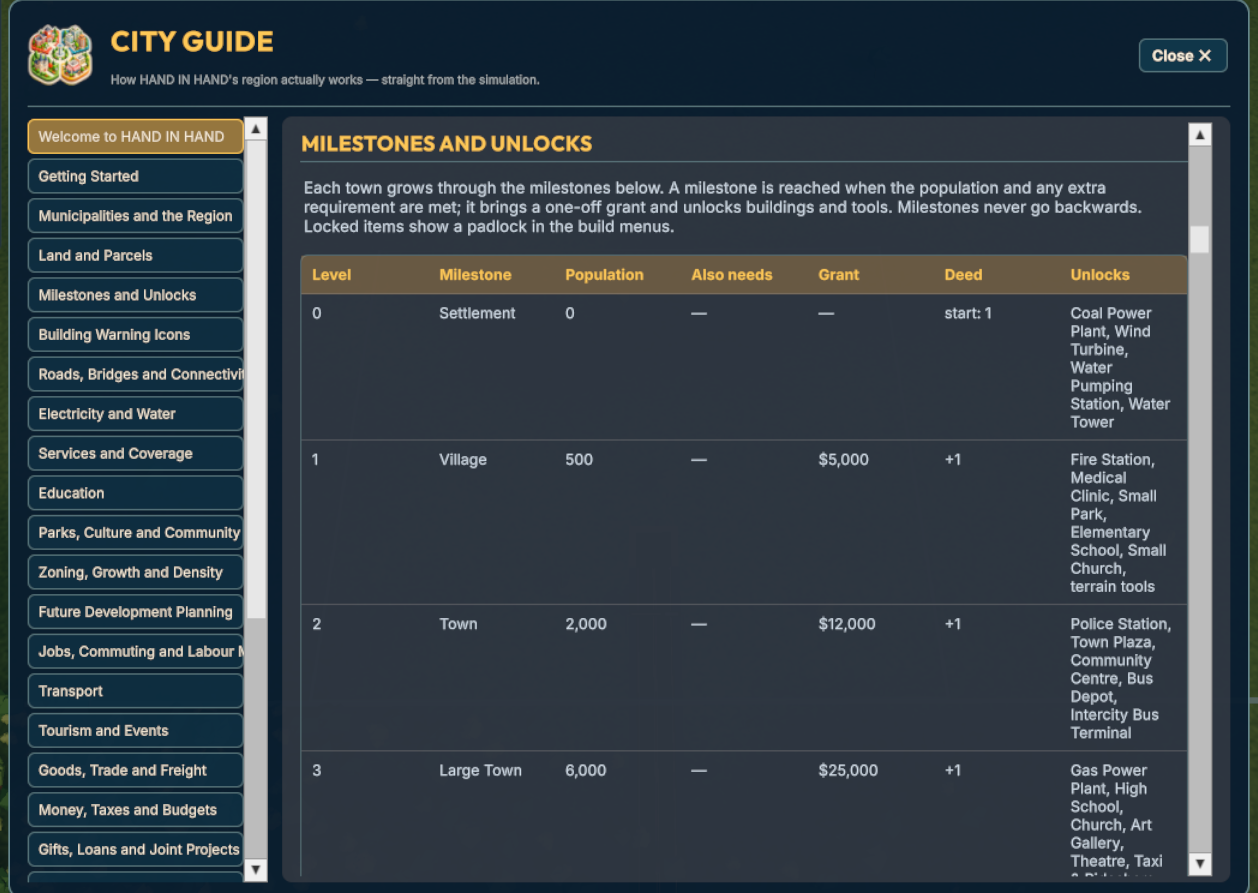
Longer multiplayer tests are reshaping the road to Capital City. A 300,000-resident goal, milestone rewards, Free Land Deeds, and infrastructure requirements give growing municipalities a more rewarding path toward coming together.
After two weeks of testing, HAND IN HAND's gameplay systems have expanded dramatically. Twelve cultural buildings, eleven transportation facilities, tourism, events, public transit, freight shipping, and a new budget-deficit penalty are making cities more interesting — and much harder to manage.
A major turning point for HAND IN HAND. Our first Windows headless dedicated server is working, allowing mayors to join persistent regions whenever they want without waiting for another player to host. After two days of testing and some unexpected encouragement from friends, I'm starting to wonder: could this actually become a game worth releasing on Steam?
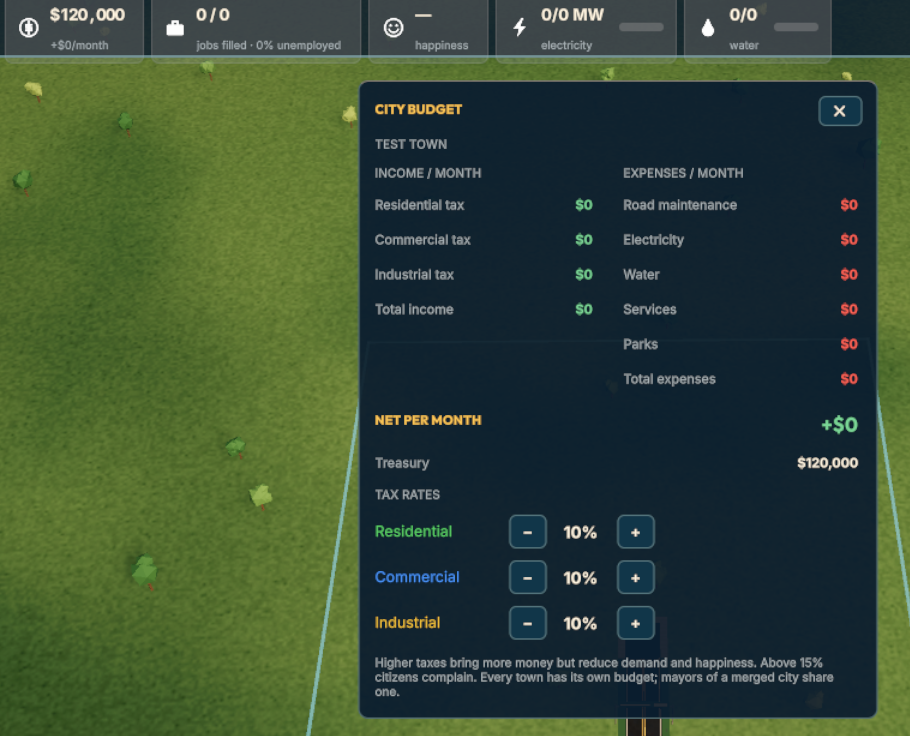
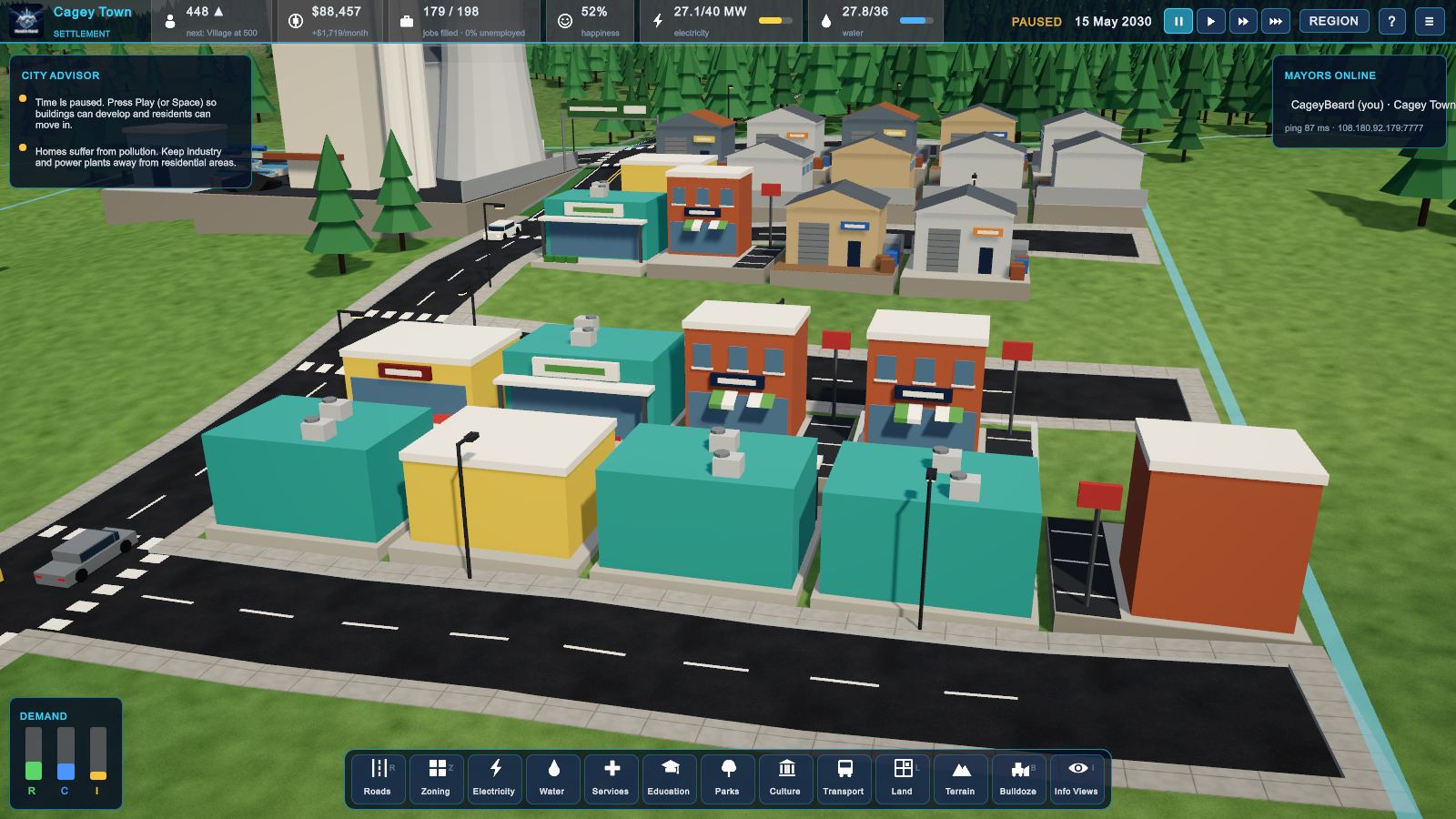
Running a city isn't cheap! What started with three simple tax rates has grown into a municipal budget system with operating costs, adjustable taxes, happiness penalties, zoning demand, and financial deals between mayors. Now comes the hard part: making the economy challenging without making it frustrating.
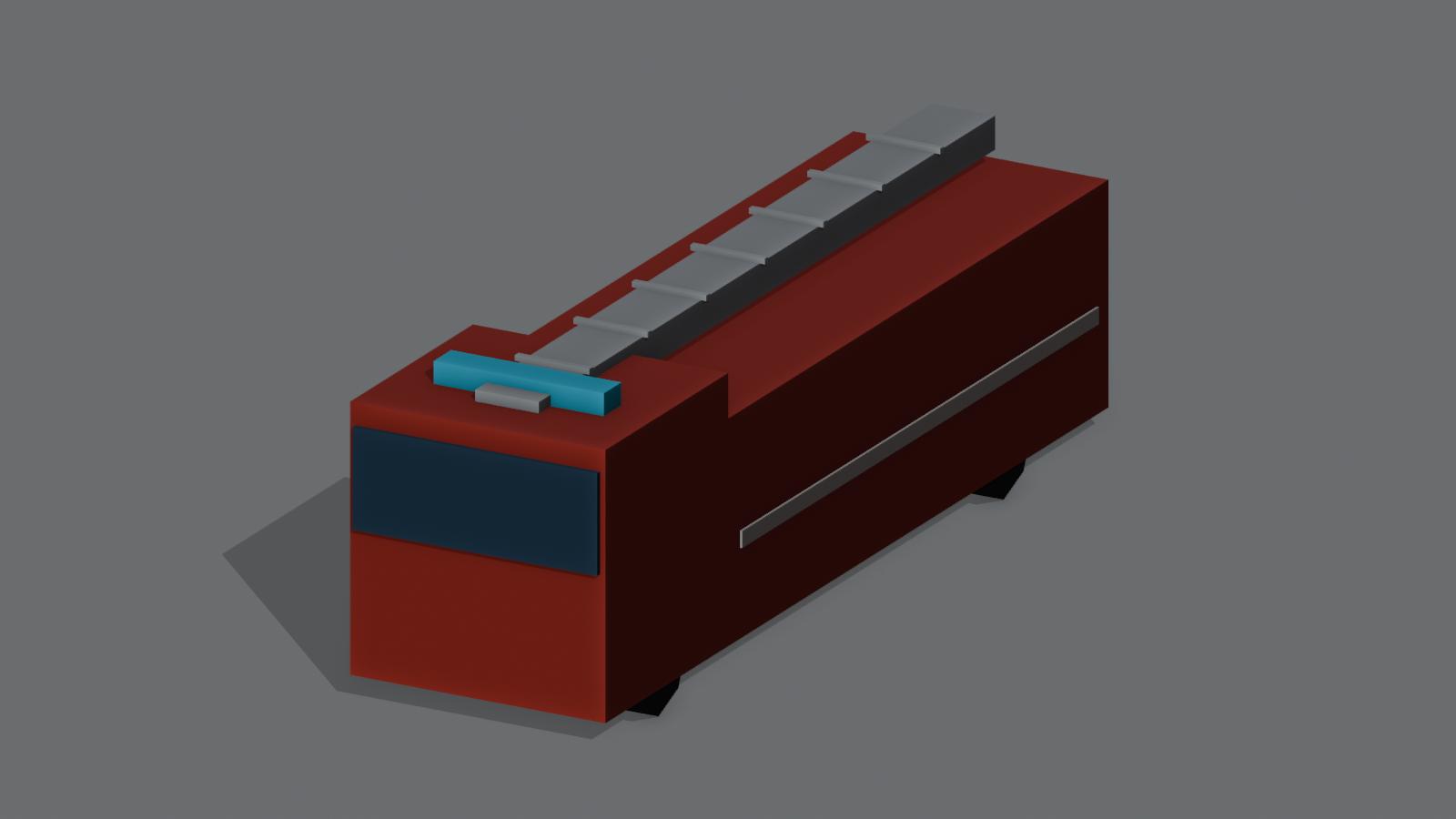
The first firetruck is responding to emergencies! What started as a simple fire-coverage calculation now sends a truck racing across town to extinguish a burning building. And the reaction from our multiplayer testers shows just how much a little movement can bring a city to life.
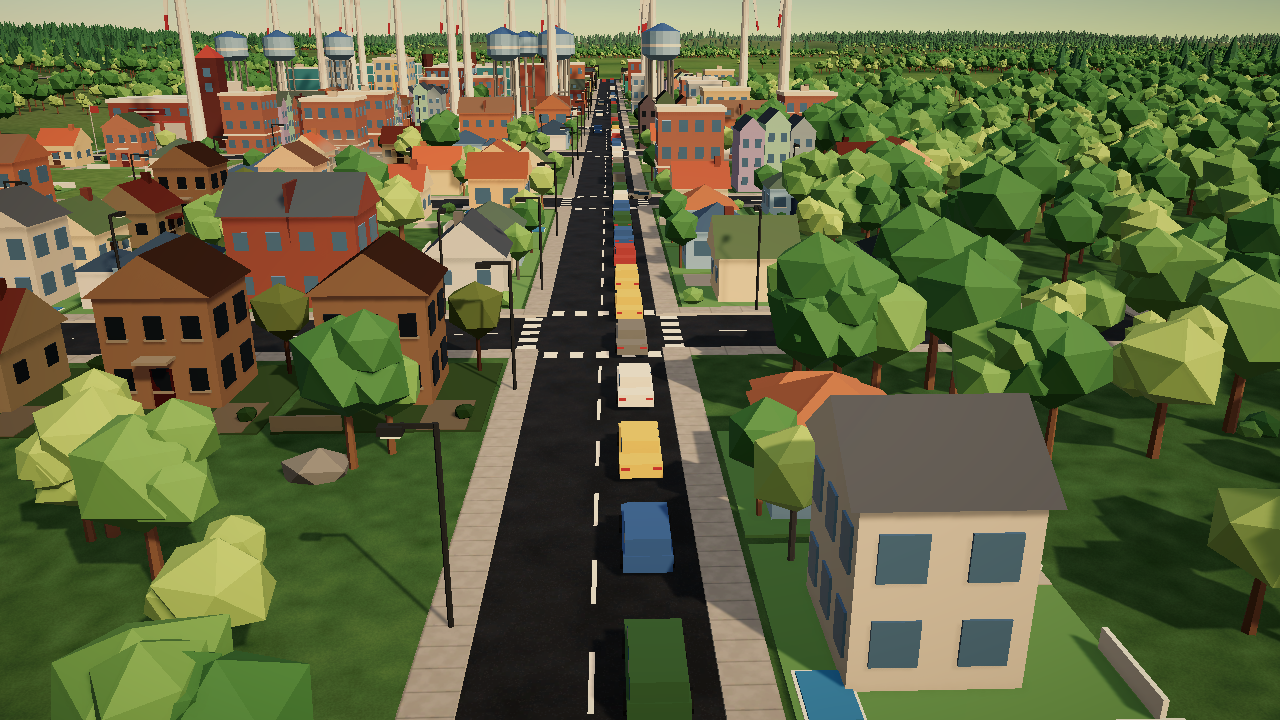
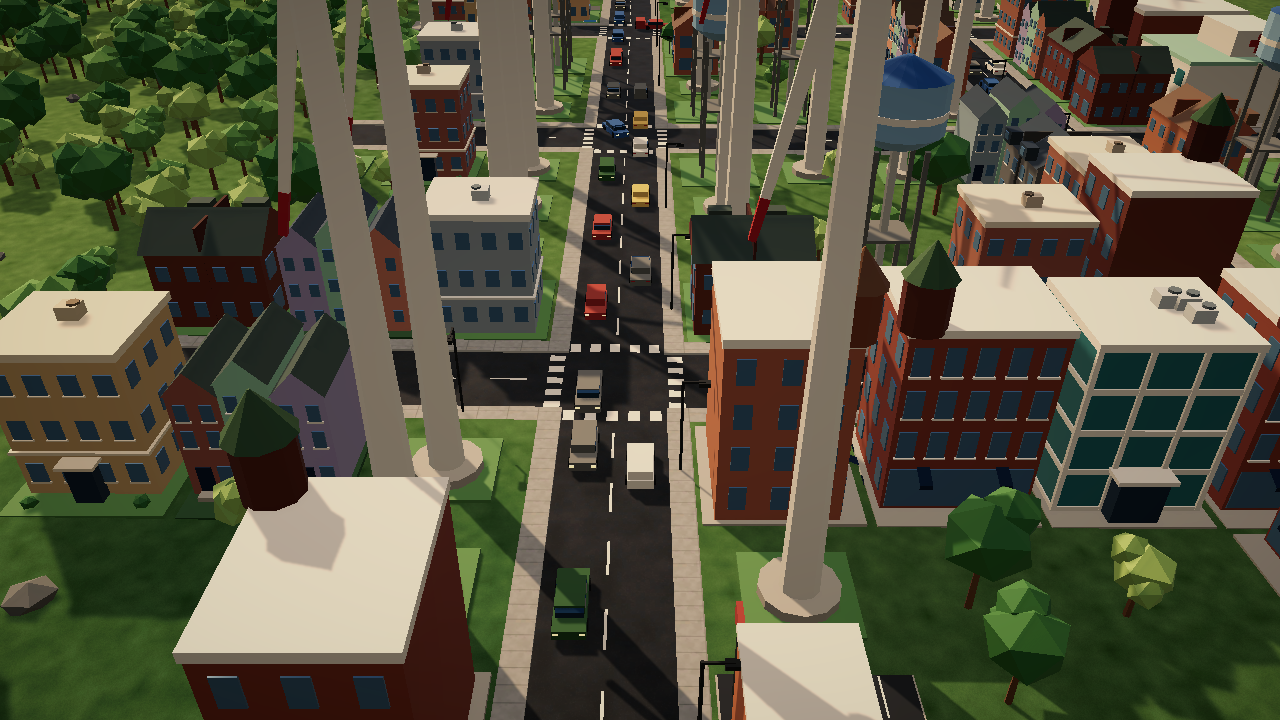
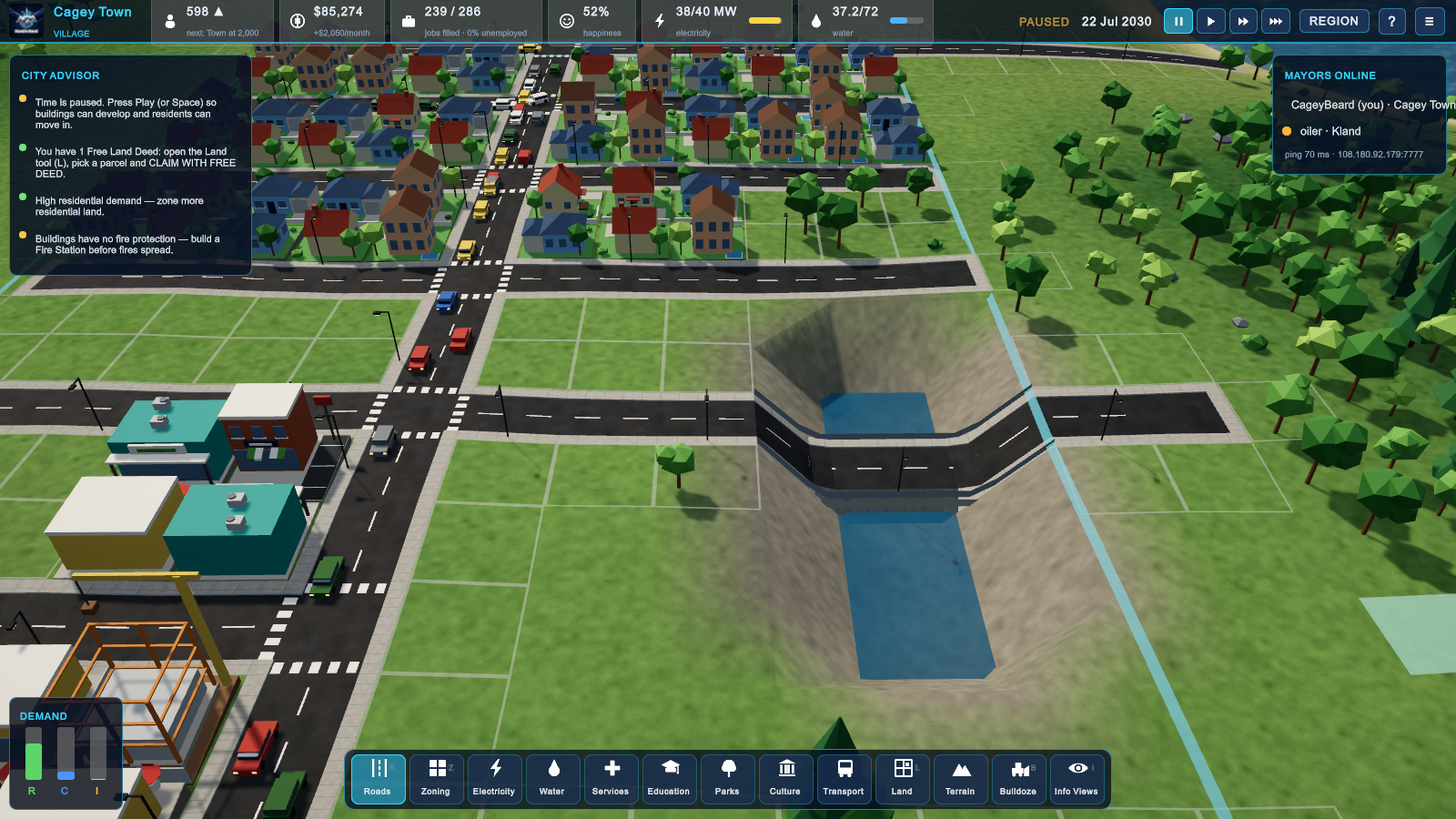
Traffic jams on empty roads, fire trucks responding to emergencies, plans for buses and trains, and bridges that finally cross rivers instead of following the riverbed. Roads are becoming one of the most important — and challenging — parts of HAND IN HAND.
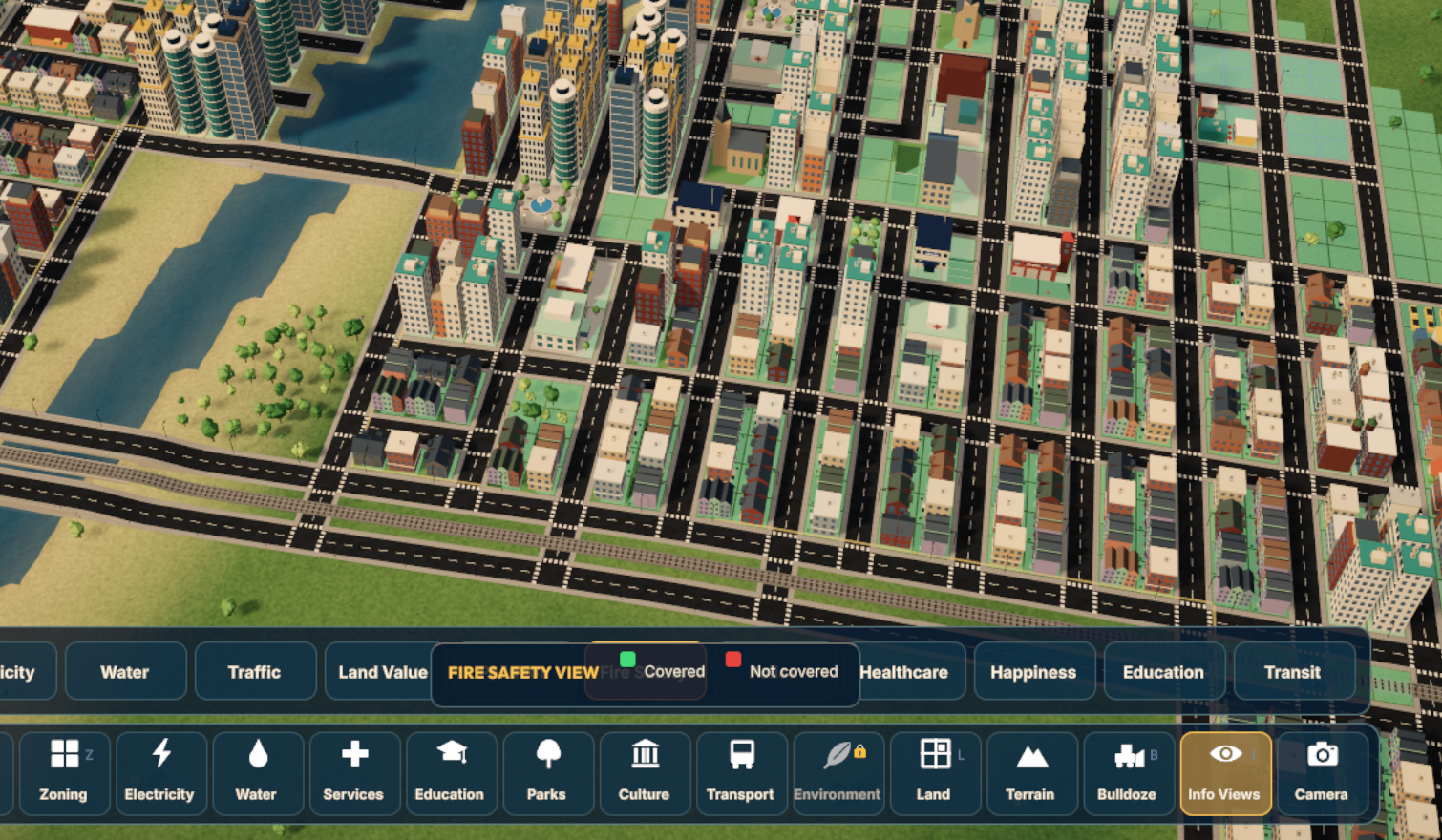
Industrial pollution, fire protection, happiness, and land value were already part of the simulation, but players needed a better way to see what was happening. The first Info Views system is here — complete with a rather unfortunate interface layout.
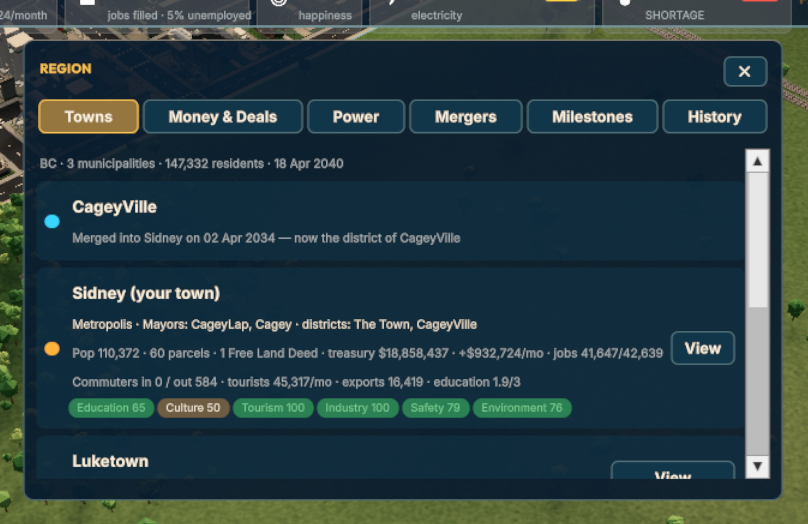
Our first two four-player multiplayer tests have been a success! Four independent towns can now vote to merge into one city, while the new Region Menu introduces financial gifts, loans, electricity trading, and more ways for mayors to cooperate before joining together.
The new cooperative system is starting to work! Mayors can now expand their independent towns until their borders meet, propose a merger, and vote on joining together. After successful tests across three regions, it's time to see what happens when more than two players get involved.
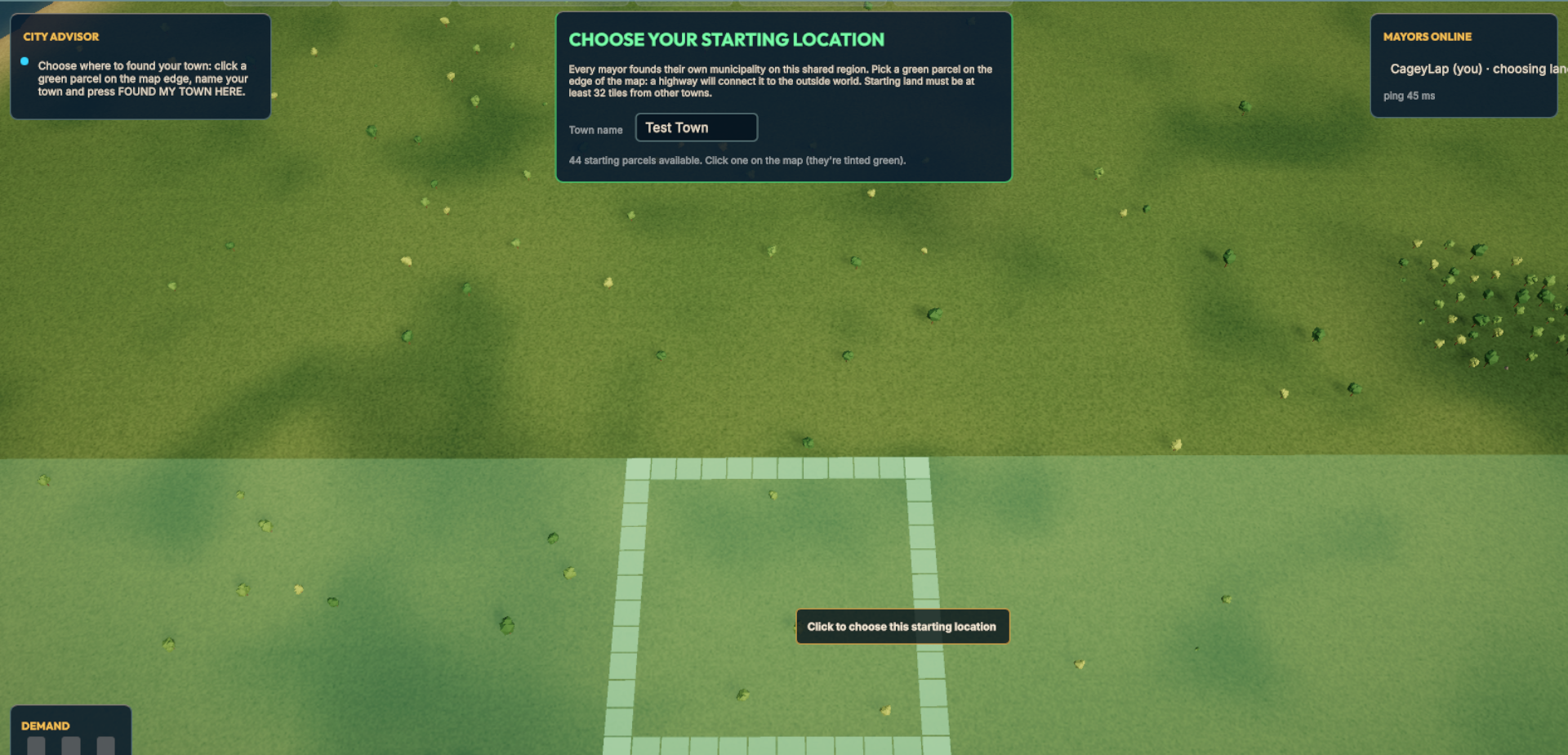
The new independent-town system is taking shape, but the first tests revealed a problem: 12 × 12 starting parcels didn't leave enough room to separate homes from industrial pollution. Free land deeds might be the solution, giving mayors more space to build without spending their entire starting budget.
One comment during a four-player testing session kept me awake thinking about the future of HAND IN HAND. What if everyone started with their own town, expanded across a shared region, and eventually voted to merge their cities together? A completely new direction for the game is taking shape.
As HAND IN HAND grew more complicated, the interface needed to keep up. From the first multiplayer lobby to city statistics and detailed building information panels, I started making it easier for players to understand what was happening in their towns.
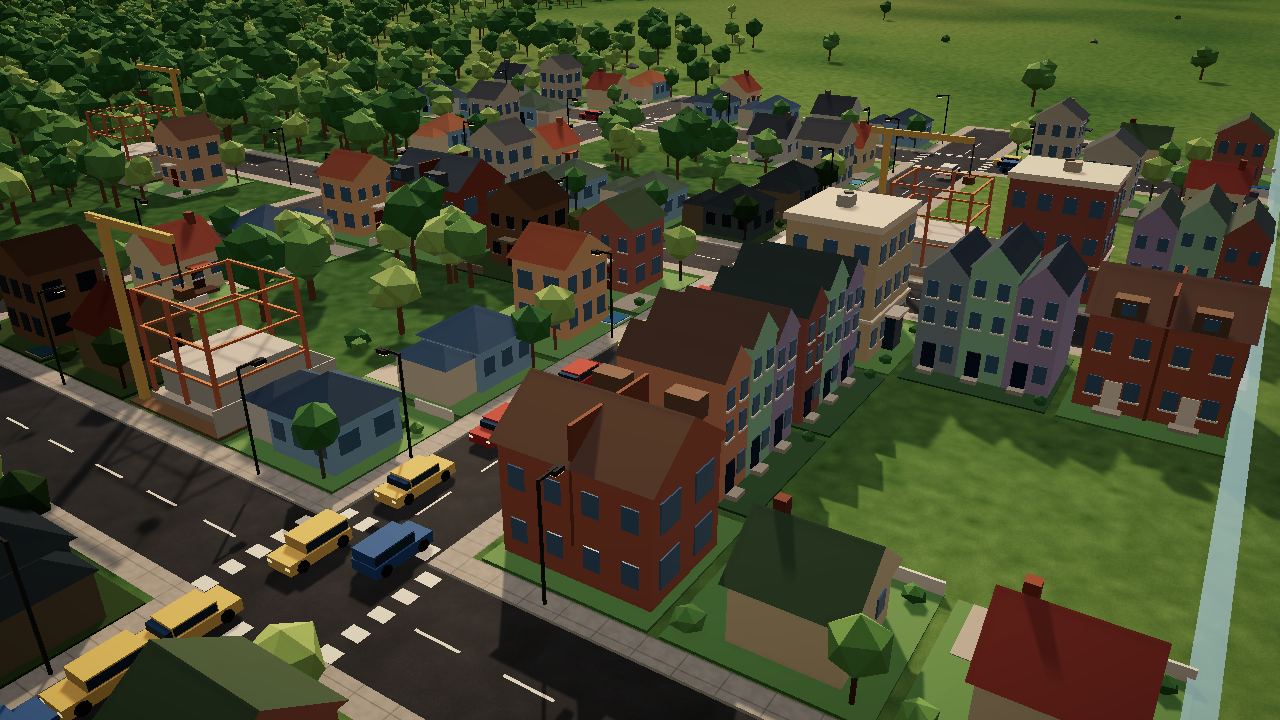
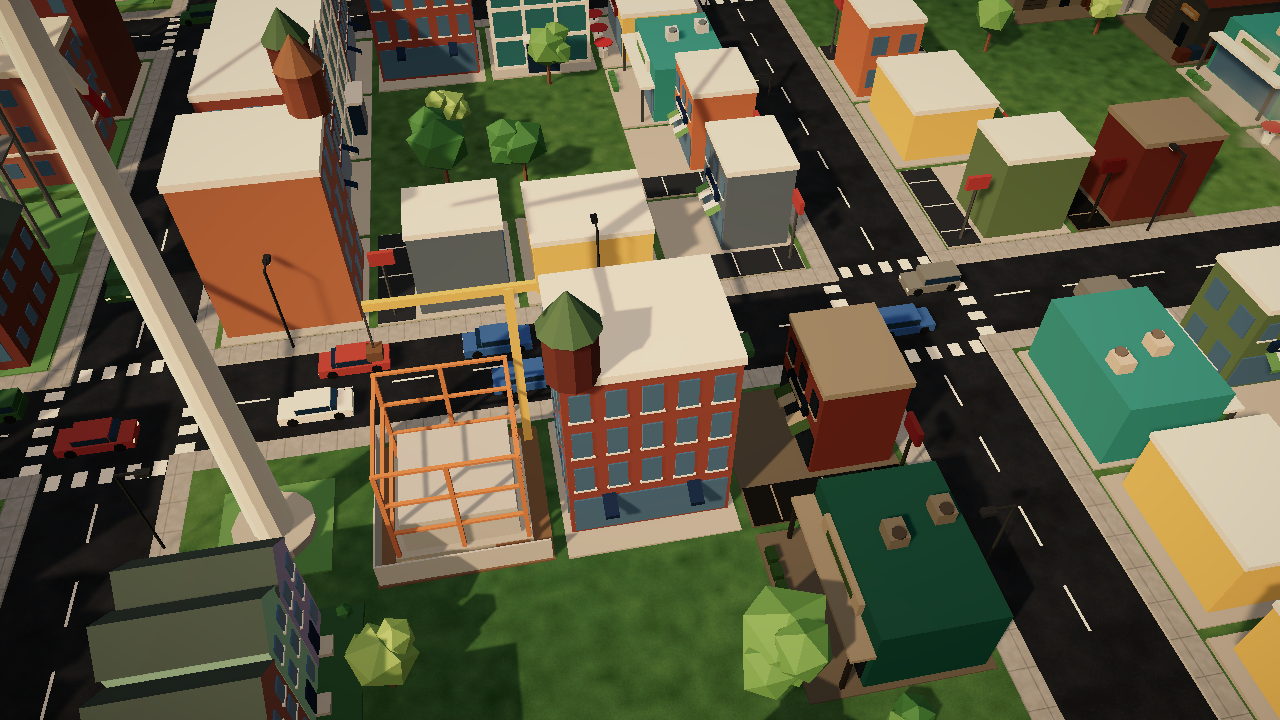
For the first time, HAND IN HAND is starting to feel like a real city. With Level 3 development appearing across the map, the skyline is growing taller, neighbourhoods are getting denser, and the larger progression systems are beginning to come together.
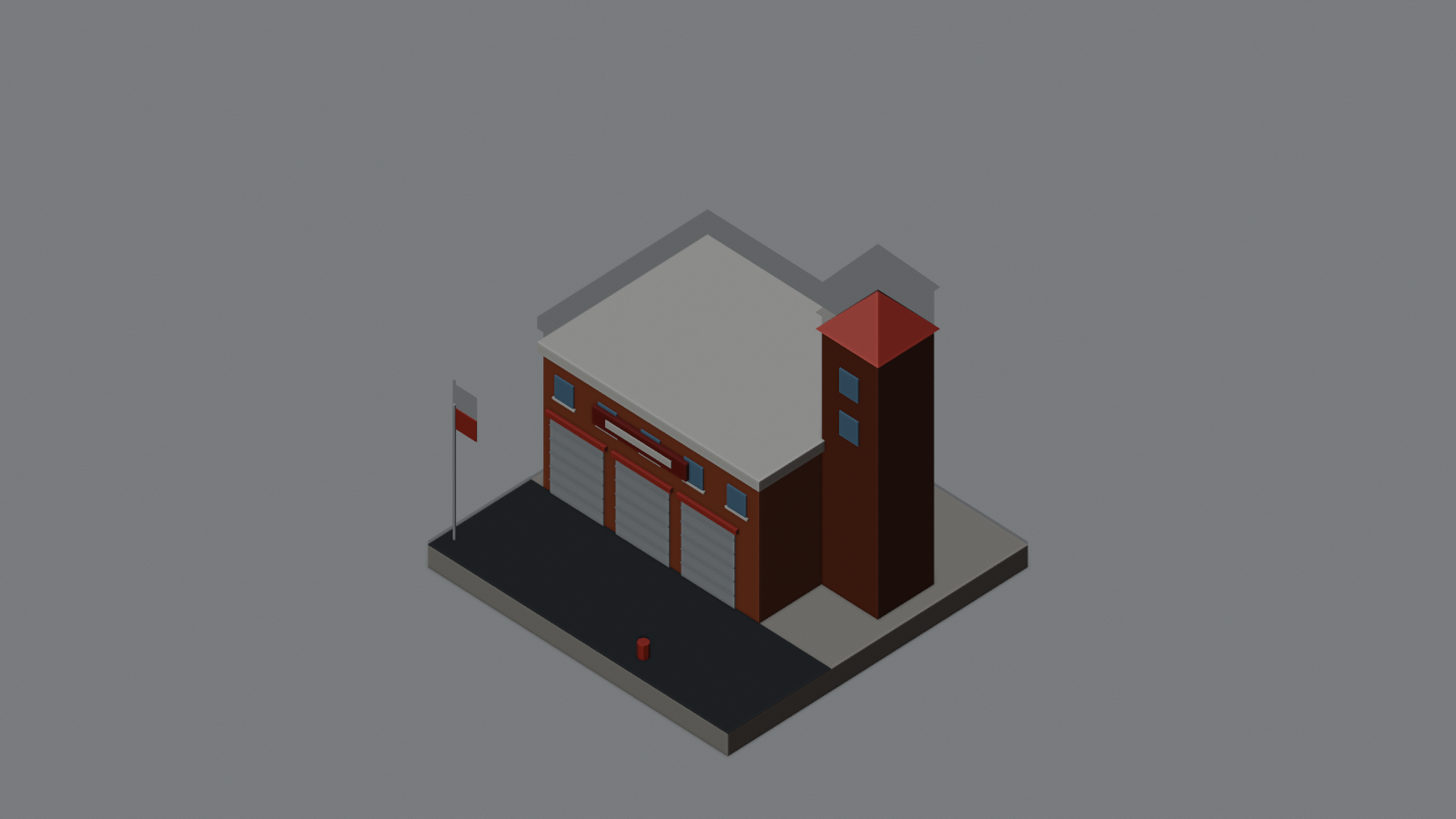
With neighbourhoods growing, it was time to introduce police and fire protection. I had grand ideas about emergency vehicles racing through the city, but the first implementation was much simpler: coverage areas, happier residents, and new requirements for building upgrades.
At first, buildings upgraded automatically when the population reached certain milestones. It worked, but wasn't particularly interesting. Here's how experimenting with schools, education coverage, and neighbourhood services began changing the way cities grow in HAND IN HAND.
One of the early goals for HAND IN HAND was making city growth feel visible. Instead of buildings simply appearing in zoned areas, I added a scaffold-based construction phase so players could see development begin before the finished structure arrived.
The streets of HAND IN HAND were finally getting some traffic. Unfortunately, the first drivers couldn't stay in their lanes, drove through each other, and sometimes travelled backwards. Here's how those early experiments became the foundation of a population-driven traffic system.
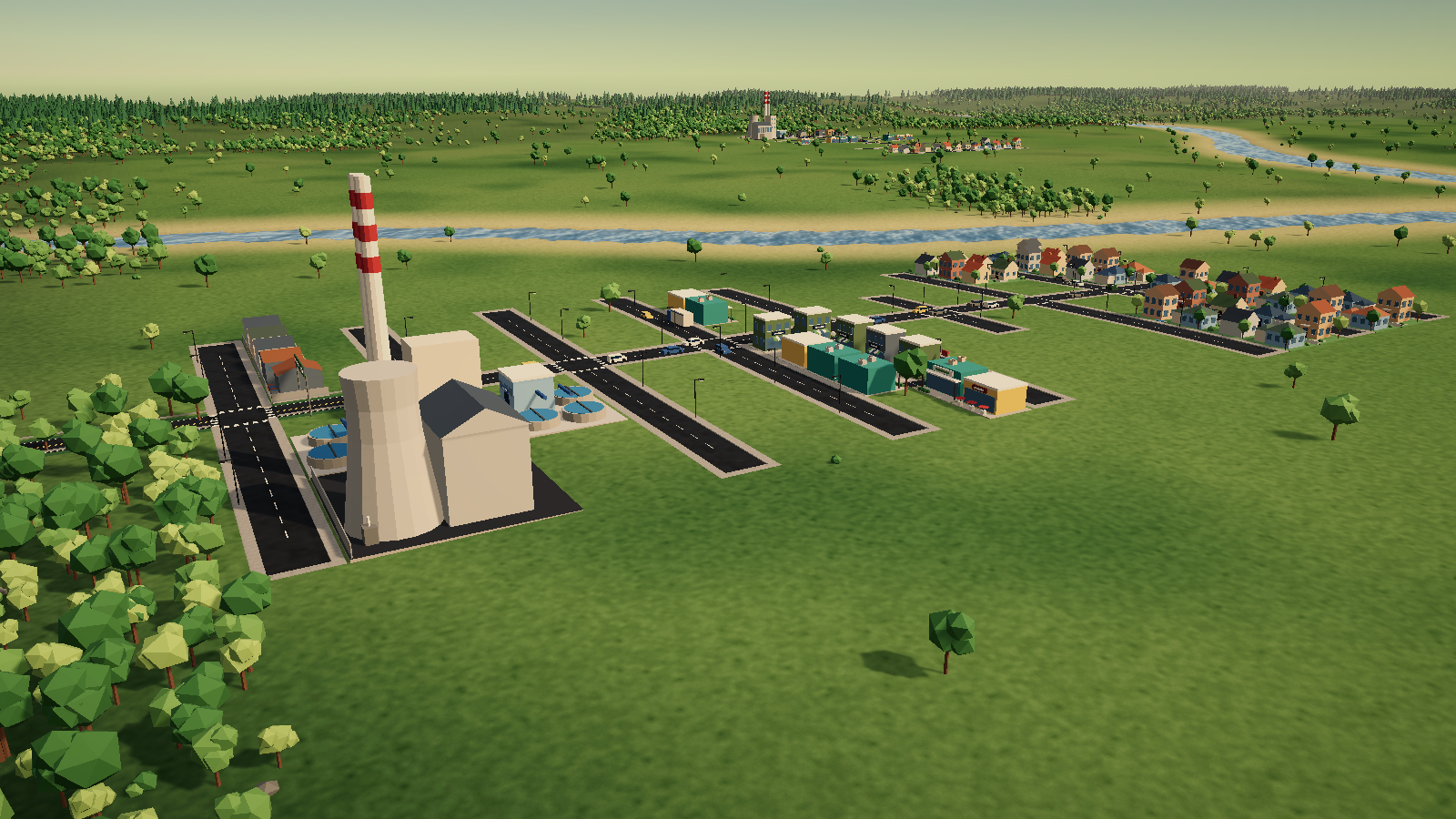
Power lines? Water pipes? After experimenting with traditional utility networks, I decided to simplify things by carrying electricity and water through the road system. Then came the first power plant — and naturally, I started with coal.
The first playable experiments with Unity and Blender were underway. Roads, buildings, and vehicles were starting to work — although the bridges had a rather unfortunate habit of sending traffic straight through the river.
What started as a Discord conversation between two friends looking for their next cooperative game became the idea for HAND IN HAND — a city builder designed to be played together.