
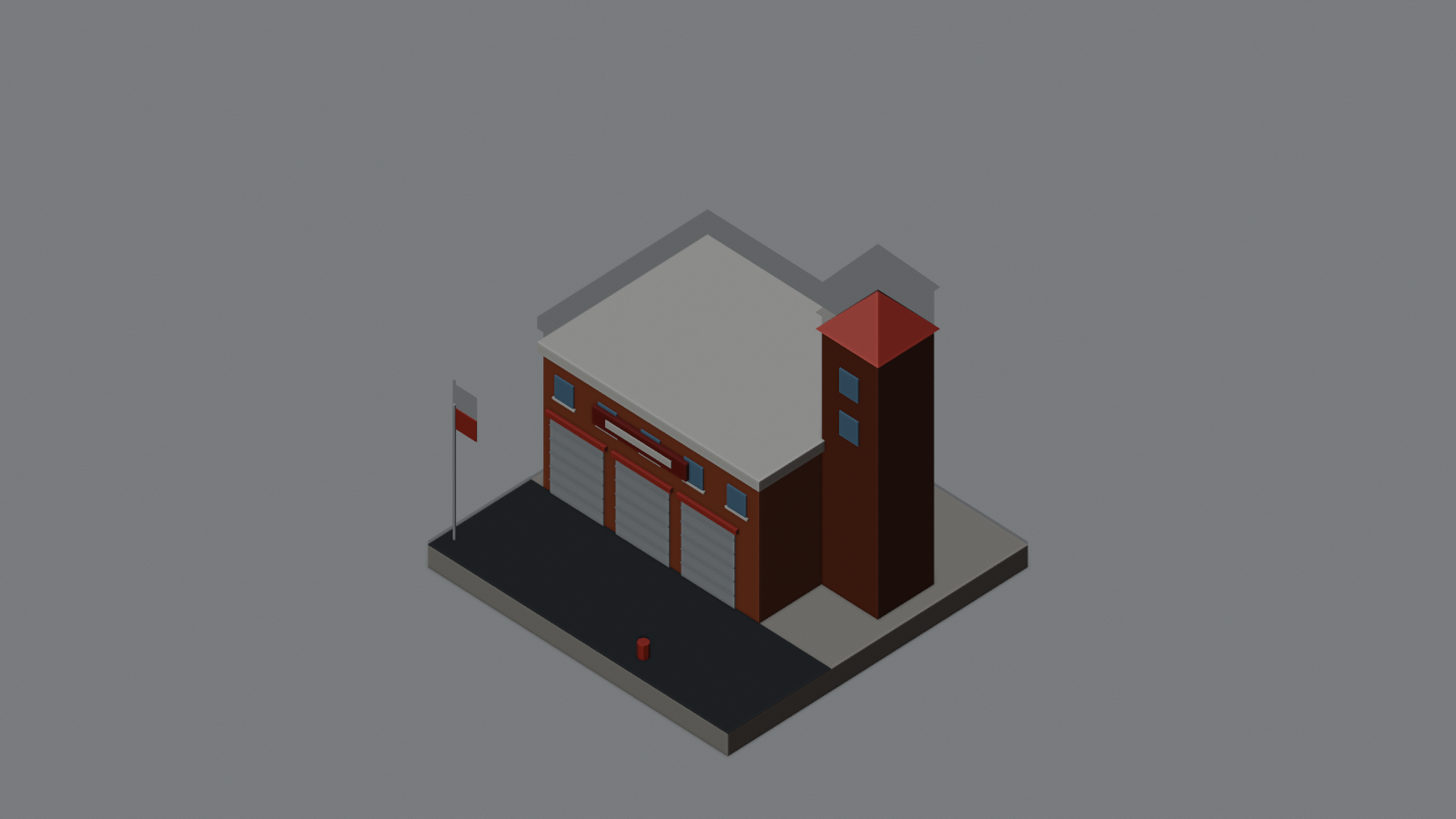
With residential neighbourhoods starting to grow and education becoming part of the building progression system, I began thinking about what other services a city should have.
Schools were a good start, but a functioning city needs more than somewhere to send the kids.
What about police? Fire protection? What happens when something goes wrong?
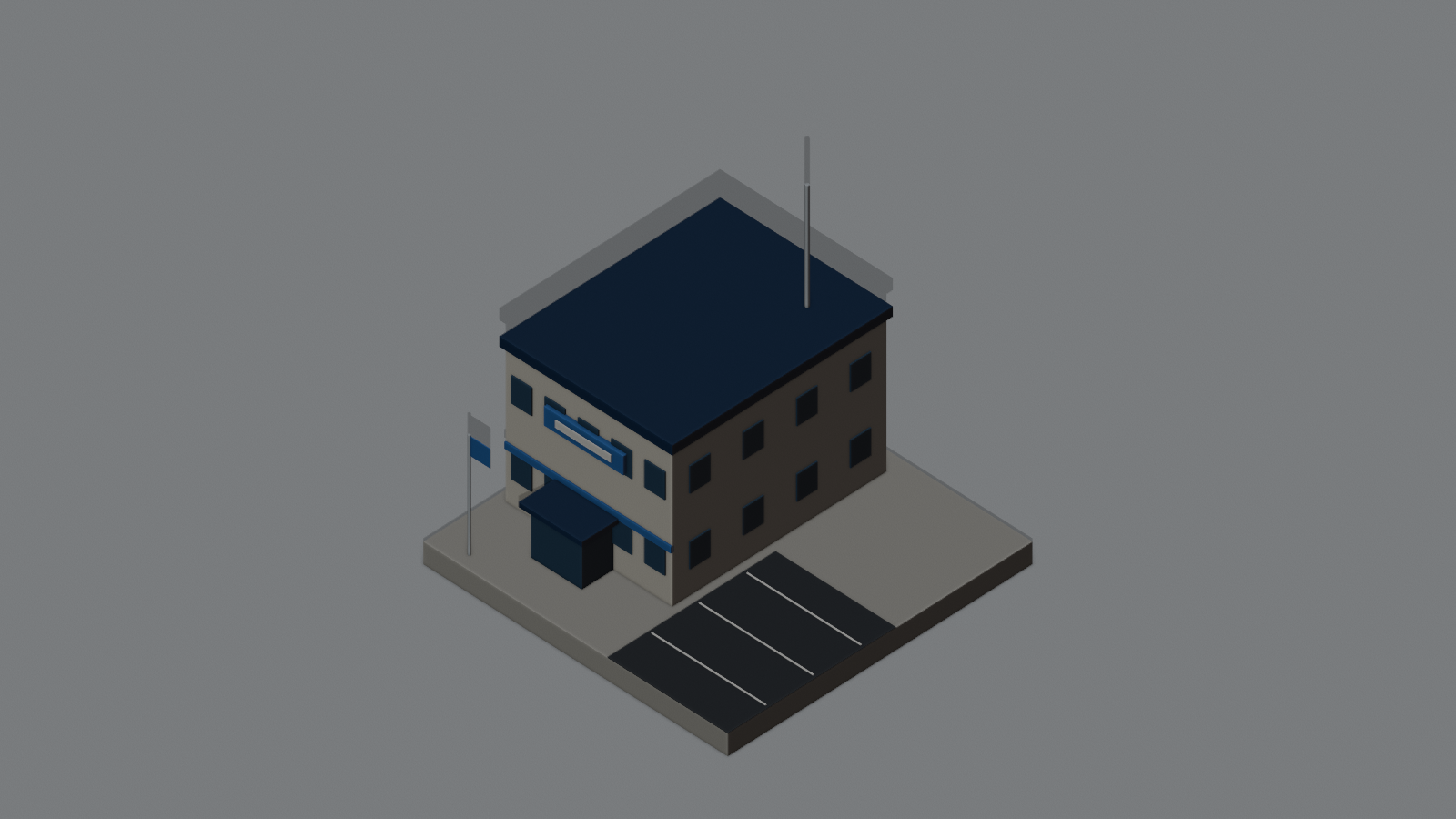
So I decided it was time to introduce a couple of new buildings to HAND IN HAND.
The Fire Station and the Police Station.
Big Ideas, Small Beginnings
When I first started thinking about adding emergency services, I had some fairly grand ideas.
I grew up with the older SimCity games, and I loved the idea of having actual emergencies happen around the city.
Imagine a building catching fire somewhere in your neighbourhood. A fire truck leaves the station, drives through the streets, reaches the building, and puts the fire out.
That sounded pretty entertaining to me.
And naturally, once you start thinking about fire trucks responding to emergencies, it's not much of a leap to imagine police vehicles doing something similar.
The problem was that I wasn't entirely sure I could actually program all of that yet.
I was still learning how to make the basic systems work together. Getting vehicles to drive along the roads without going backwards or straight through each other had already been enough of an adventure.
Adding emergency dispatching, response vehicles, and actual fires seemed like a pretty big step.
So rather than getting carried away trying to build everything at once, I decided to start with something much simpler.
The Magic Circle of Protection
My first idea was to give each emergency service building a coverage radius.
Place a fire station somewhere in your town, and it would provide protection to the surrounding area.
For the initial tests, I used a coverage distance of 12 map squares.
Anything within that radius would benefit from having fire protection nearby.
The police station would work in much the same way, providing police coverage to the surrounding neighbourhoods.
No fire trucks rushing around the map. No police cars chasing criminals.
Not yet, anyway.
Just two buildings providing a service to the surrounding area.
It was simple, but it gave the player another reason to think carefully about where they built things.
Making Services Actually Matter
Of course, I didn't want the fire and police stations to be purely decorative.
In the previous devlog, I'd started experimenting with education as a requirement for residential buildings to advance to higher levels.
That gave me an idea.
Why not do the same thing with fire and police protection?
As a neighbourhood develops, the game could check whether its buildings had access to the services they needed.
Does the property have education coverage?
Does it have fire protection?
Does it have police coverage?
Each of these could become one of the conditions the game checks before allowing a zoned building to advance to its next development level.
I also tied service coverage into the happiness system, so having access to emergency services could contribute to how happy residents were with their neighbourhood.
Suddenly, adding a fire station wasn't just about placing another building on the map.
It became part of making a neighbourhood more desirable and helping it grow.
A Different Kind of City Planning
This also created some interesting choices.
You could build a large residential neighbourhood, but if you didn't provide the services it needed, development might eventually slow down.
Or you could invest in a fire station and police station, positioning them to cover as many properties as possible.
Since each building had a limited coverage area, placement mattered.
Build too far away, and some neighbourhoods wouldn't receive the benefits.
It wasn't an especially complicated system, but that was actually part of what I liked about it.
I wanted players to understand why their neighbourhoods were developing, and what they could do to improve them.
Sometimes Simple Is Better
After playing around with the first version of the system, it seemed to work pretty well.
The fire and police stations now had a purpose. They affected happiness, contributed to neighbourhood development, and gave players more decisions to make.
And I didn't have to figure out how to program an entire emergency response system to get there.
At least not yet.
I'm still interested in the idea of having actual fire trucks responding to burning buildings someday.
But for now, I'm going to stick with the coverage-radius approach and see how it affects the gameplay as the cities get bigger.
That's one of the things I'm learning while building HAND IN HAND.
Sometimes you don't need to implement the biggest version of an idea right away. You just need to find a version that works and makes the game more fun.
The city's growing, the residents have schools, and now they've got police and fire protection.
I think we're starting to build a respectable little town.
Just don't ask where the fire trucks are yet.